
As industries worldwide shift toward sustainable practices, the plastic manufacturing sector is under increasing pressure to reduce its environmental footprint. Among the key players in this transformation are plastic pipe extruders, which play a vital role in producing durable, recyclable, and energy-efficient piping systems.
Plastic pipe extrusion technology has evolved to support eco-friendly manufacturing by optimizing material usage, reducing waste, and enabling the production of pipes that contribute to sustainable infrastructure. This article explores how modern extrusion processes align with green manufacturing principles, the materials driving sustainability, and the future of eco-conscious pipe production.
1. Reducing Material Waste Through Advanced Extrusion Techniques
One of the most significant contributions of plastic pipe extruders to sustainability is minimizing material waste. Traditional manufacturing methods often generate excess scrap, but modern extrusion lines are designed for efficiency.
Precision Extrusion Control
Computerized monitoring systems ensure exact dimensions, reducing over-extrusion and defective products.
Closed-loop feedback mechanisms adjust parameters in real-time, optimizing material usage.
Recycling Scrap Material
Many extruders integrate regrind systems, allowing manufacturers to reuse production scraps.
In-line recycling processes melt and re-extrude excess plastic, reducing landfill contributions.
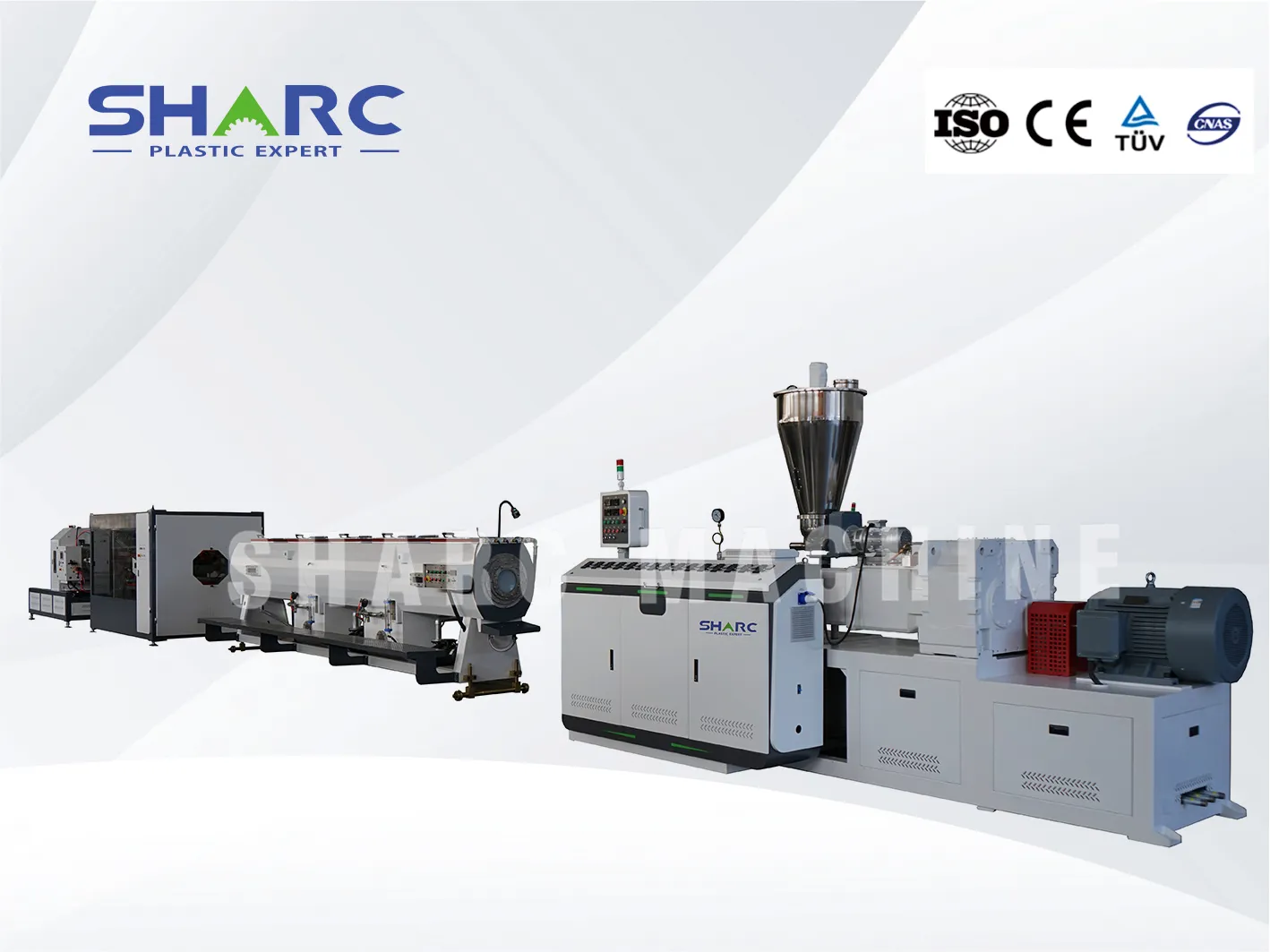
2. Energy-Efficient Extrusion Processes
Energy consumption is a major concern in manufacturing, but advancements in extrusion technology have led to lower energy demands without compromising output quality.
High-Efficiency Screw Designs
Barrier screws and mixing screws improve melting efficiency, reducing power consumption.
Variable-frequency drives (VFDs) optimize motor speed based on demand, cutting energy waste.
Heat Recovery Systems
Some extrusion lines now incorporate waste heat recovery to preheat raw materials or facility spaces.
Infrared heating zones replace conventional heaters, offering faster, more controlled heating with less energy.
3. Sustainable Materials in Pipe Extrusion
The choice of plastic resin significantly impacts the environmental footprint of pipe production. Extruders are increasingly processing biodegradable, recycled, and long-lasting materials to support sustainability.
Recycled Plastics (rPE, rPVC, rPP)
Post-consumer recycled (PCR) plastics are being incorporated into new pipes, reducing reliance on virgin polymers.
Industrial regrind programs allow manufacturers to reuse defective pipes and trimmings.
Bio-Based and Degradable Polymers
PLA (Polylactic Acid) and PHA (Polyhydroxyalkanoates) are emerging as biodegradable alternatives for non-pressure pipes.
Bio-PE (sourced from sugarcane) offers a renewable option with properties similar to conventional polyethylene.
Longevity and Corrosion Resistance
Plastic pipes inherently outlast metal alternatives, reducing replacement frequency and resource consumption.
Corrosion-resistant materials (HDPE, PP) eliminate the need for chemical coatings, further lowering environmental impact.
4. Lightweight Design and Transportation Benefits
Plastic pipes are significantly lighter than metal or concrete alternatives, leading to reduced fuel consumption during transportation.
Lower Carbon Emissions in Logistics
A single truck can carry more plastic pipes than metal ones, decreasing the number of trips required.
Nestable and flexible pipe designs maximize shipping efficiency, further cutting emissions.
Reduced Installation Energy
Plastic pipes require less heavy machinery for installation compared to traditional materials.
Fusion welding techniques (used for HDPE and PEX) eliminate the need for chemical solvents or adhesives.
5. Supporting Green Infrastructure Projects
Plastic pipes are essential in eco-friendly construction and water management systems, contributing to broader sustainability goals.
Rainwater Harvesting and Drainage Systems
Permeable piping solutions help manage stormwater sustainably, reducing urban flooding.
Recycled HDPE pipes are widely used in sustainable drainage systems (SuDS).
Renewable Energy Applications
Geothermal heating systems rely on durable plastic pipes for efficient heat exchange.
Solar thermal piping often uses corrosion-resistant PP or PEX for long-term performance.
Water Conservation Technologies
Leak-resistant joints in plastic pipes minimize water loss in municipal systems.
Drip irrigation pipes (LDPE) optimize agricultural water usage, supporting sustainable farming.

6. Future Trends in Sustainable Pipe Extrusion
The industry continues to innovate, with several emerging trends enhancing the eco-friendliness of plastic pipe production.
Smart Manufacturing and Industry 4.0
AI-driven process optimization reduces trial-and-error waste in extrusion.
Predictive maintenance extends machinery lifespan, lowering resource consumption.
Circular Economy Initiatives
Take-back programs encourage pipe recycling at the end of their lifecycle.
Chemical recycling advancements may soon allow broken-down plastics to be reused indefinitely.
Carbon-Neutral Production Goals
Some manufacturers are transitioning to renewable energy-powered extrusion plants.
Carbon offset programs are being adopted to neutralize emissions from pipe production.
Conclusion: Extruders as Catalysts for Sustainable Manufacturing
Plastic pipe extruders are no longer just production tools—they are key enablers of green manufacturing. By adopting energy-efficient processes, sustainable materials, and waste-reducing technologies, the extrusion industry is helping build a more eco-conscious future.
As demand for sustainable infrastructure grows, manufacturers who prioritize recyclability, energy savings, and long-lasting performance will lead the market. The ongoing evolution of extrusion technology promises even greater strides in reducing plastic waste, conserving resources, and supporting global environmental goals.
By continuing to innovate, the plastic pipe industry proves that durability and sustainability can go hand in hand—delivering high-performance piping solutions while protecting the planet.