
Sheet extrusion is a specialized manufacturing process used to produce continuous flat plastic sheets with consistent thickness and quality. The process involves melting raw plastic materials, shaping them into flat sheets, and cooling them to retain their form. This article explores the sheet extrusion process, its components, applications, advantages, and advancements, providing a comprehensive understanding of its role in modern manufacturing.
How Does Sheet Extrusion Work?
Sheet extrusion transforms raw plastic pellets or granules into flat sheets using heat, pressure, and shaping mechanisms. The process involves several critical steps:
1. Material Feeding
The process begins by feeding raw plastic materials, such as polyethylene (PE), polypropylene (PP), or polycarbonate (PC), into a hopper. These materials are typically in pellet form for easy handling and consistent melting.
2. Melting and Conveying
Inside the extruder, the plastic is melted as it moves through a heated barrel. A rotating screw conveys the material while generating the pressure and friction needed for uniform melting.
3. Shaping Through a Flat Die
The molten plastic is pushed through a flat die, which determines the width and thickness of the sheet. The precision of the die design ensures uniform sheet dimensions.
4. Cooling and Solidification
The extruded sheet passes through cooling rolls or water baths to solidify. Cooling systems play a crucial role in maintaining the sheet’s flatness and dimensional accuracy.
5. Trimming and Winding
The edges of the sheet are trimmed for uniformity, and the sheet is either cut into specific lengths or wound into rolls for easy transport and storage.
Key Components of a Sheet Extrusion System
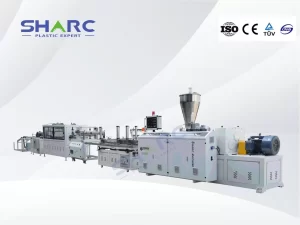
A sheet extrusion system includes several vital components, each playing a critical role in the production process:
1. Extruder
The extruder melts and conveys the plastic material. It includes a barrel, screw, and heaters designed to handle various polymers.
2. Flat Die
The flat die shapes the molten plastic into a sheet with precise width and thickness.
3. Cooling System
Cooling rolls or baths quickly solidify the extruded sheet to maintain dimensional stability.
4. Trimming Station
Trimming equipment removes excess material along the sheet edges, ensuring uniformity.
5. Winding System
For continuous production, winding systems roll the extruded sheets into coils for downstream processing.
Types of Plastics Used in Sheet Extrusion
Sheet extrusion is compatible with a wide variety of thermoplastic materials, including:
Polyethylene (PE): Commonly used for packaging and protective films.
Polypropylene (PP): Known for its lightweight and chemical resistance.
Polyvinyl Chloride (PVC): Frequently used in construction and decorative applications.
Acrylic (PMMA): Valued for its optical clarity in applications like displays and signage.
Polystyrene (PS): Often used in disposable food containers and packaging.
Advantages of Sheet Extrusion
The sheet extrusion process offers several benefits, making it a preferred method in plastic manufacturing:
1. Cost-Effectiveness
Continuous production ensures low material waste and reduced labor costs.
2. Versatility
Sheet extrusion accommodates a wide range of plastics, colors, and finishes to meet specific application requirements.
3. High Precision
Advanced dies and cooling systems ensure consistent sheet thickness and surface quality.
4. Recyclability
Extruded sheets often incorporate recycled materials, contributing to sustainable manufacturing practices.
Challenges in Sheet Extrusion
Despite its benefits, sheet extrusion poses certain challenges:
Thickness Variability: Maintaining uniform thickness across the sheet can be challenging without precise controls.
Material Limitations: Certain polymers may require specific extrusion conditions, adding complexity to the process.
Cooling Efficiency: Inadequate cooling can lead to warping or uneven surfaces.
Innovations in Sheet Extrusion Technology
Recent advancements in sheet extrusion technology have enhanced productivity and product quality. Key innovations include:
1. Multi-Layer Extrusion
Co-extrusion technology enables the production of sheets with multiple layers, combining different materials for improved functionality.
2. Energy-Efficient Systems
Modern extruders feature energy-saving technologies such as optimized screw designs and low-energy cooling systems.
3. Smart Controls
Automated systems monitor and adjust process parameters in real-time, reducing defects and downtime.
4. Recycled Material Integration
Technologies now enable the efficient use of recycled plastics in sheet production without compromising quality.
The Future of Sheet Extrusion
As industries prioritize sustainability and efficiency, sheet extrusion is expected to evolve further. Future trends may include:
Biodegradable Plastics: Increased use of biodegradable materials in extrusion processes.
Digitalization: Integration of Industry 4.0 technologies for smarter and more efficient production lines.
Enhanced Recycling: Improved recycling techniques to accommodate a broader range of plastics.
Conclusion
Sheet extrusion is a cornerstone of the plastic manufacturing industry, providing a reliable method for producing high-quality, versatile sheets for diverse applications. By understanding its processes, components, and advancements, manufacturers can leverage this technology to meet evolving market demands. As innovations continue to shape the industry, sheet extrusion remains a critical driver of sustainable and efficient production practices.