
Discarded polymers accumulate rapidly across industrial landscapes, turning improper scrap management into a direct drain on profitability. Facility managers face constant pressure to convert heterogeneous waste streams into reusable pellets without triggering excessive downtime or energy spikes.
Bridging the gap between raw material variation and profitable granule output requires a deliberate configuration strategy. Equipment lines fail not from poor manufacturing, but from a mismatch between the physical state of the incoming polymer and the mechanical limits of the processing hardware.
What Defines Your Plastic Waste Stream Before Choosing Machinery?
Polymer Categories
Polymer family identification separates standard polyolefins from engineering thermoplastics with distinct melt behaviors.
Each polymer structure demands precise thermal profiles to prevent thermal degradation during processing, ensuring your facility evaluates available macchine per il riciclaggio della plastica con assoluta precisione.
Failing to identify the exact polymer family often leads to uneven melting, thermal breakdown, and a sharp decline in the mechanical properties of the final recycled granules.
Feedstock Origins
Feedstock source origin dictates contamination profiles, ranging from clean industrial trim to heavily degraded post consumer bales. Post industrial scrap usually arrives sorted and relatively clean, whereas post consumer municipal waste contains paper labels, food residues, and mixed polymer contaminants.
Tracing the origin helps engineers determine the necessary preliminary sorting steps and washing intensity required to protect downstream mechanical components from premature wear and blockages.
Contamination Metrics
Surface moisture levels and melt flow index variations dictate whether auxiliary degassing and stabilization units are required. Establishing these baseline physical parameters prevents premature mechanical failure.
For example, processing post consumer film requires aggressive tearing and friction washing before thermal processing, whereas clean industrial lumps bypass heavy wash cycles entirely, directly optimizing your facility’s energy footprint and overall operational efficiency.
Having established these material characteristics, let us examine how specific waste streams map directly to designated recycling hardware configurations.
How to Match Machinery to Different Plastic Waste Types
Rigid PE and PP Waste
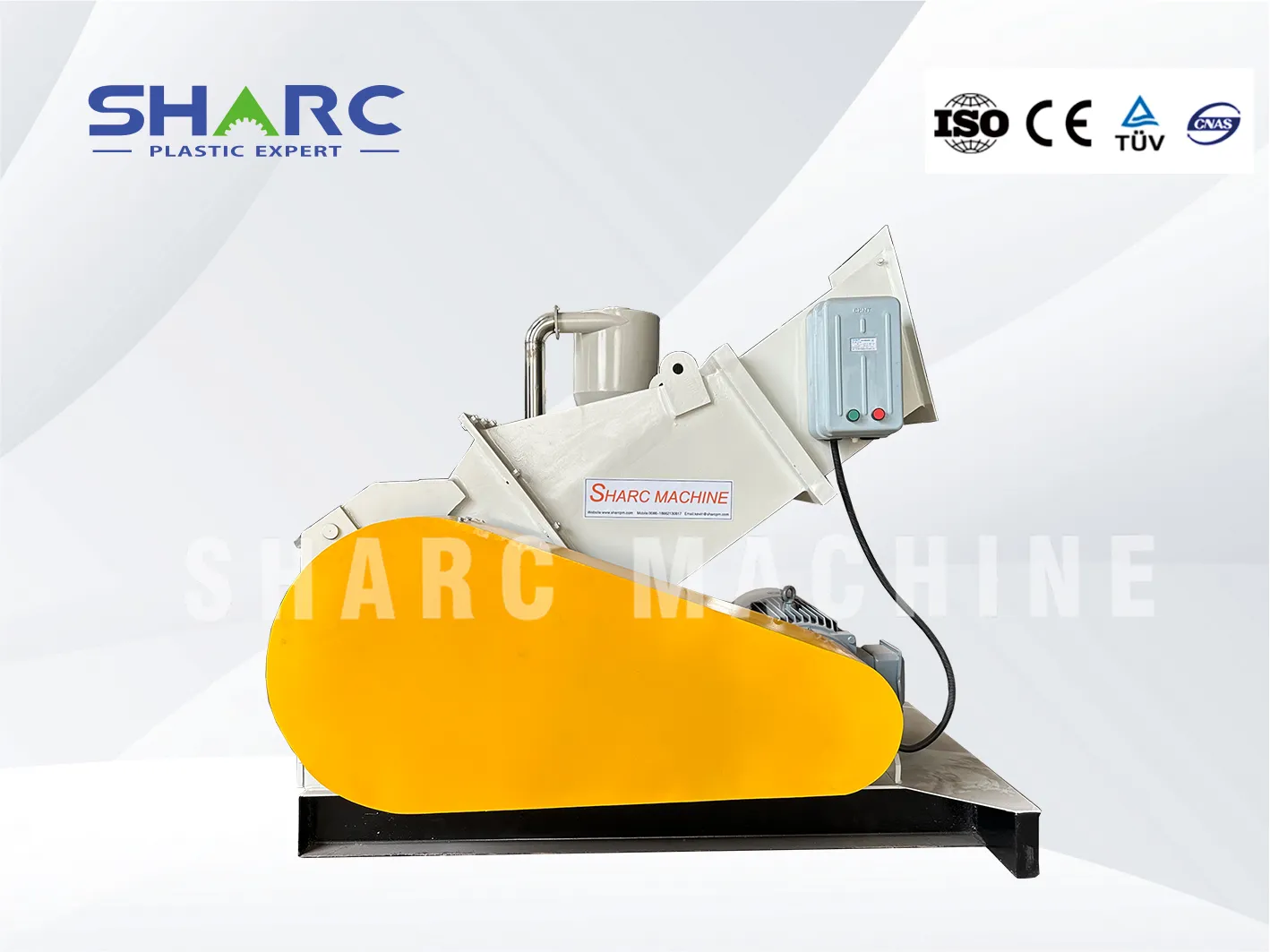
Rigid containers and thick walled crates demand robust size reduction before cleaning due to their high structural rigidity and substantial wall thickness. Integrating a macchina per triturare la plastica breaks down bulky components into uniform flakes suitable for subsequent washing and extrusion stages.
Selecting the correct rotor configuration and screen size ensures that material is reduced evenly without generating excessive frictional heat that could prematurely soften the polymer prior to entering the main washing line.
LDPE Film Waste
Flexible film scraps present unique challenges due to low bulk density, high surface area, and high moisture retention. Processing these light materials requires specialized compaction units, forced feeding systems, and efficient mechanical dewatering mechanisms to prevent feeding bottlenecks inside the barrel.
Without adequate densification before extrusion, fluffy film waste tends to bridge at the hopper throat, causing erratic output rates and severe pressure fluctuations across the extruder die.
Borse in tessuto PP
Woven sacks often contain residual dust, fine soil particles, and complex lamination layers that complicate standard washing routines. Deploying dedicated washing systems strips away stubborn surface impurities and extraneous coatings to guarantee high purity flake output.
Because woven tapes tend to entangle easily around rotating shafts, specialized cutting equipment and friction washers are essential to break apart the fabric structure and release trapped mineral contaminants before thermal processing.
Scarti di bottiglie in PET
Post consumer PET bottles require meticulous separation of caps, labels, and adhesives to prevent polymer cross contamination. Once sorted, washed, and dried, PET flakes require a compatible recycling and pelletizing system designed for polyester processing.
Because PET is highly sensitive to moisture at elevated temperatures, maintaining rigorous crystallization and drying protocols prior to extrusion is critical to prevent polymer chain scission and loss of intrinsic viscosity.
| Flusso di rifiuti | Forma primaria | Key Processing Challenge | Recommended System Focus |
| Rigid PE/PP | Containers and Crates | High wall thickness and bulk rigidity | Size reduction, washing, and single screw pelletizing |
| Film LDPE | Agricultural and Packaging Film | Low density and moisture retention | Film feeding, dewatering, and pelletizing |
| Sacchi intrecciati in PP | Raffia Bags and Sacks | Contaminazione da particolato fine | Cutting, washing, dewatering, and pelletizing |
| Bottiglie in PET | Bales and Containers | Labels, adhesives, and polymer separation | Sorting, washing, drying, and PET recycling |
Matching these modular stages ensures that material moves smoothly from raw waste to uniform granules without bottlenecks. Having mapped equipment configurations to physical scrap types, we must next address the hidden chemical variables that undermine output quality.

How to Avoid Costly Mismatches: Hidden Feedstock Variables That Destroy Extrusion Output
Contaminanti chimici
Trace PVC contamination releases corrosive hydrochloric acid gas under high barrel temperatures, which can accelerate corrosion and damage extrusion components.
Even minor cross contamination compromises the structural integrity of the entire production run, leading to brittle pellets and frequent screen pack blinding.
Implementing strict optical sorting and robust pre screening protocols prevents unwanted polymers from entering the high temperature plasticizing zone.
Moisture Thresholds
Inadequate dewatering or high residual moisture trapped inside washed film introduces excessive water vapor during melting.
This vapor buildup can destabilize barrel pressure and lead to inconsistent granule density if degassing units are improperly sized.
Incorporating efficient mechanical squeezers and thermal dryers ensures that moisture levels remain well below critical thresholds before the polymer reaches the extrusion screw.
Viscosità allo stato fuso
Uncontrolled melt flow index fluctuations cause inconsistent strand tension and frequent breakage at the pelletizer die. Operating an extrusion line without screening for these hidden variables invites sudden mechanical degradation. Rigorous blending protocols and melt stabilization practices ensure that barrel pressure remains stable throughout long production runs, resulting in uniform pellet size and dependable physical performance.
Moving from chemical variables to financial metrics, let us evaluate the operational expenses that dictate long term project viability.
What Are Practical Technical and Financial Metrics for Evaluation?
Consumo di energia
Specific power consumption ratios measure electricity consumed per ton of finished output across the entire recycling line.
Optimizing motor loads, heating zones, and drive systems helps facilities maintain high output targets while controlling electrical overhead.
Monitoring kilowatt hours per ton provides plant managers with a reliable benchmark to identify operational inefficiencies and schedule preventative maintenance before energy spikes occur.
Durabilità dei componenti
Hardened alloy compositions on screws, barrels, and cutting blades extend service intervals under abrasive operating conditions.
Balancing initial capital expenditure against long term operational expenses determines whether a recycling plant turns a profit.
Investing in premium metallurgy for high wear zones significantly reduces unexpected downtime and lowers the frequency of costly replacement parts during continuous industrial production.
Livelli di automazione
Programmable logic controller automation levels reduce operator dependency and stabilize line output by monitoring temperature, pressure, and feed rates in real time.
Selecting durable components and reliable manufacturing partners minimizes unexpected replacement costs during continuous operations.
Advanced automation allows plant technicians to track performance metrics instantly, ensuring consistent product quality with minimal manual intervention.
Domande frequenti
What are the primary factors that influence the total investment price of an industrial plastic recycling line?
The overall cost depends heavily on daily throughput capacity, the specific polymer waste type, contamination severity, washing complexity, and the degree of automation. For accurate pricing based on your specific recycling requirements, contact our engineering team directly for a customized quotation.
How do forced vacuum exhaust systems help manage volatile impurities and trapped moisture during film extrusion?
Forced vacuum exhaust systems remove low molecular weight impurities, residual moisture, and printing inks from the melting polymer. This continuous degassing prevents porosity in the final pellets and stabilizes barrel pressure during continuous production runs.
What is the recommended approach for determining the appropriate screw length to diameter ratio when processing film waste?
Film recycling typically requires a longer length to diameter ratio to provide adequate residence time for volatile degassing and complete melting of low bulk density material.
Conclusione
Selecting the right plastic waste recycling machine depends on the characteristics of the waste stream and the quality requirements of the finished pellets. Polymer type, material form, contamination, moisture, and required throughput should all be considered when configuring shredding, washing, dewatering, extrusion, filtration, and pelletizing equipment.
Matching each processing stage to the actual feedstock can improve line stability, control operating costs, and reduce unnecessary equipment wear. If you are evaluating a recycling project or need a system matched to your specific plastic waste, contattare il nostro team di ingegneri to discuss the appropriate machine configuration.