
The use of uPVC (unplasticized polyvinyl chloride) in window frame production has become a common practice across the construction and home improvement industries due to its durability, weather resistance, and low maintenance. One of the most important processes in manufacturing uPVC window frames is extrusion. But why is extrusion the chosen method? What benefits does it offer in terms of performance, efficiency, and cost?
Understanding uPVC and Its Role in Window Frame Production
Before exploring the extrusion process, it is essential to understand what uPVC is and why it is a preferred material for window frames. uPVC is a rigid and chemically resistant form of PVC that does not contain plasticizers. As a result, it has excellent thermal insulation properties, is immune to moisture and corrosion, and offers high dimensional stability even under extreme weather conditions.
Compared to wood or aluminum, uPVC requires significantly less maintenance and does not warp, rot, or rust. These attributes make uPVC an ideal material for modern window systems, especially in both residential and commercial construction sectors.
What Is Extrusion in Manufacturing?
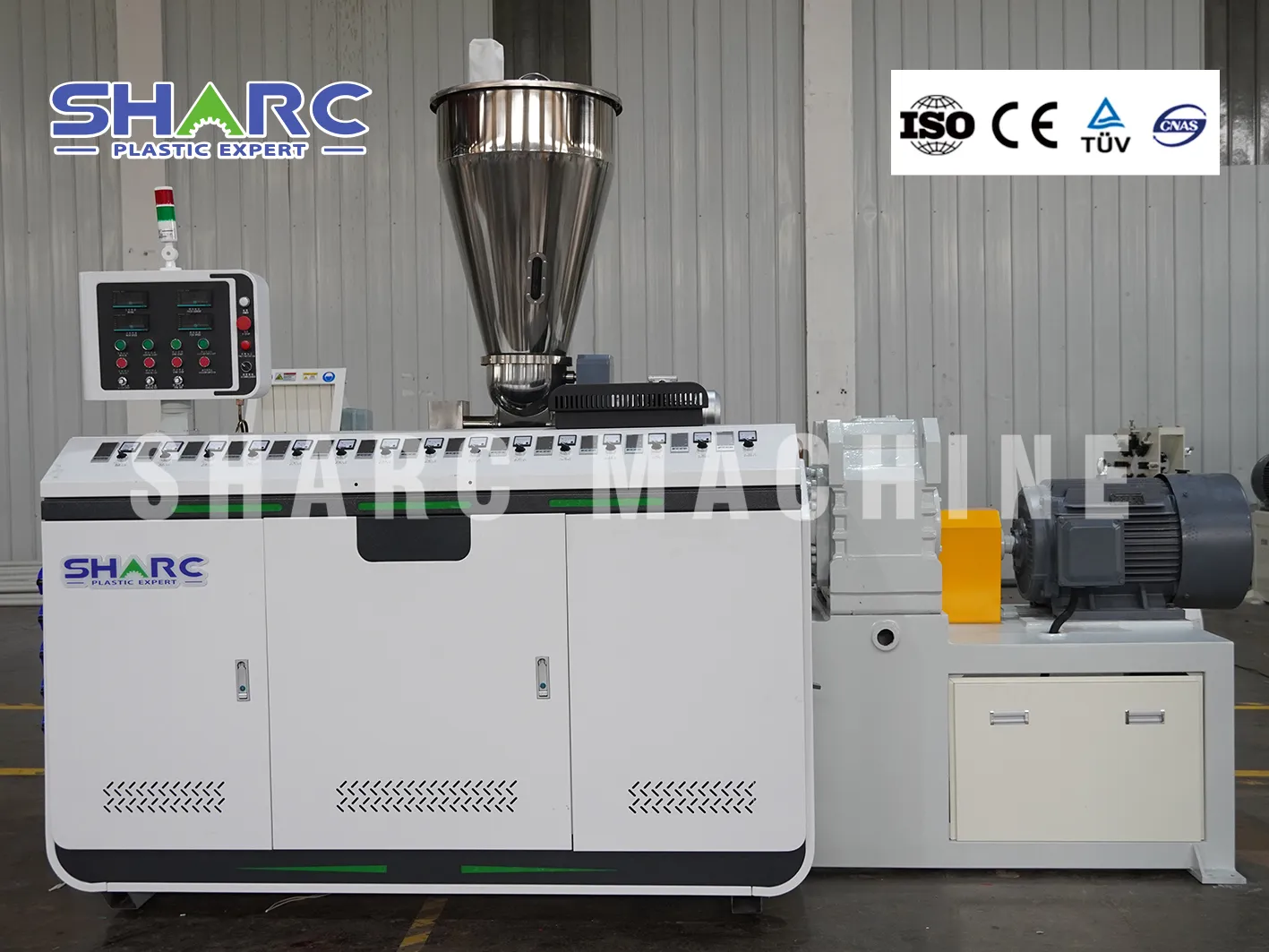
Extrusion is a high-volume manufacturing process used to create objects of a fixed cross-sectional profile. During extrusion, a material is pushed or drawn through a die of the desired shape. This process is particularly suitable for materials like uPVC, which can be melted and shaped easily.
In the context of uPVC window frames, the extrusion process involves heating uPVC resin and pushing it through a precision-engineered die to form the desired profile. The extruded length is then cooled, cut to size, and further fabricated as necessary.
The Advantages of Using Extrusion for uPVC Window Frames
1. Consistent Quality and Dimensional Precision
Extrusion offers a high degree of control over the dimensions and surface finish of the profiles. Since window frames must meet precise tolerances for airtight sealing and hardware fitting, extrusion ensures that each section conforms exactly to specifications.
Through automated control systems and advanced die designs, manufacturers can achieve excellent consistency across large production runs. This reduces the risk of defective components and ensures smooth assembly on-site.
2. High Efficiency for Mass Production
One of the most compelling reasons extrusion is used for uPVC frames is its ability to support high-volume, continuous production. The process can run 24/7 with minimal downtime, making it ideal for manufacturers looking to produce thousands of meters of profile per day.
Because the process is continuous, it eliminates many of the time-consuming steps associated with other manufacturing methods. This efficiency contributes to cost savings and helps meet tight project deadlines.
3. Customizable and Complex Profile Design
Window frames often include multiple internal chambers to enhance insulation and strength. These multi-chamber profiles can be easily produced using specially designed extrusion dies. Extrusion makes it possible to integrate multiple functions—such as drainage channels, reinforcement spaces, and thermal breaks—into a single profile.
Furthermore, extrusion allows for variations in wall thickness, the inclusion of co-extruded gaskets, and even surface laminations, all in one continuous process. This flexibility is invaluable in customizing products to meet specific regional and architectural requirements.
4. Material Efficiency and Waste Reduction
Because extrusion is a highly controlled and repeatable process, it minimizes material waste. The ability to reclaim and recycle off-cuts or scrap material further improves the material efficiency of uPVC frame production.
In many extrusion facilities, leftover uPVC is ground, re-melted, and re-extruded into internal layers of profiles, reducing both environmental impact and raw material costs.
The Extrusion Process Step by Step
To better understand the role of extrusion in manufacturing uPVC window frames, here’s a simplified overview of the process:
Material Preparation
The process begins with uPVC resin, often blended with stabilizers, impact modifiers, pigments, and other additives. These ingredients are thoroughly mixed to form a uniform feedstock.
Feeding and Melting
The blended material is fed into an extruder, where rotating screws convey it through a heated barrel. Temperatures typically range from 170°C to 200°C, melting the uPVC into a homogeneous, plasticized state.
Shaping through the Die
The molten uPVC is forced through a die that shapes it into the cross-section required for the window frame. The die design is critical to ensure proper flow and cooling of the material.
Calibration and Cooling
After exiting the die, the hot profile enters a calibration table where it is cooled using water and vacuum systems. This step solidifies the shape and ensures dimensional accuracy.
Haul-Off and Cutting
A haul-off unit pulls the cooled profile at a controlled rate, and an automated saw cuts it to the desired length. The cut pieces are then prepared for further fabrication, such as welding or reinforcement.

Co-Extrusion for Enhanced Functionality
Modern uPVC window profiles often feature co-extrusion, a variant of the extrusion process where multiple materials or colors are extruded simultaneously. For example, a soft thermoplastic elastomer can be co-extruded to form integrated sealing gaskets, eliminating the need for post-installation seals.
Similarly, decorative foils or weather-resistant caps can be applied to the exterior surface during extrusion, enhancing both aesthetic appeal and UV resistance. This integrated approach reduces manufacturing steps and increases product longevity.
Environmental and Sustainability Considerations
With growing concerns over environmental sustainability, extrusion provides a responsible method for producing uPVC frames. The process allows for high levels of recycled content, and many uPVC profiles can be reprocessed multiple times without significant degradation in performance.
Moreover, uPVC window frames extruded with precision offer excellent thermal insulation, helping to reduce a building’s energy consumption over its lifetime. Combined with long service life and low maintenance needs, this makes extruded uPVC frames a sustainable choice.
Challenges and Quality Control in Extrusion
Despite its advantages, extrusion requires stringent process control to avoid issues such as profile warping, inconsistent wall thickness, or surface defects. Die wear, incorrect temperature settings, and improper calibration can all impact the final quality.
Therefore, manufacturers implement rigorous quality assurance protocols, including dimensional checks, color matching, impact resistance testing, and weatherability assessments. These measures ensure that the final product meets regulatory and performance standards.
Conclusion: Why Extrusion Is the Preferred Choice
Extrusion has established itself as the optimal manufacturing method for uPVC window frames due to its versatility, precision, and cost-effectiveness. It allows for the production of complex, multi-functional profiles with high consistency and minimal waste. The process supports modern construction demands for energy efficiency, customization, and sustainability, while meeting the practical needs of large-scale manufacturing.
For any company looking to deliver high-quality uPVC windows, extrusion remains the cornerstone technology that combines engineering excellence with economic feasibility.