
PVC (polyvinyl chloride) is one of the most widely used plastic materials across industries due to its versatility, durability, and cost-effectiveness. PVC profiles are integral to a range of applications, including window frames, doors, pipes, and decorative trims. The process of creating these profiles relies on a manufacturing technique known as extrusion. This article will provide a detailed understanding of what PVC profile extrusion entails, how the process works, and its importance in modern industry.
Understanding PVC and Its Properties
Before delving into the extrusion process, it is essential to understand PVC as a material. PVC is a type of plastic that is lightweight, weather-resistant, and highly durable. It is resistant to chemical corrosion, UV radiation, and other environmental factors, making it ideal for outdoor applications.
PVC can be made in various forms, such as rigid or flexible, depending on the additives used. For profile extrusion, rigid PVC is typically used because of its strength and dimensional stability.
What is Extrusion in Manufacturing?
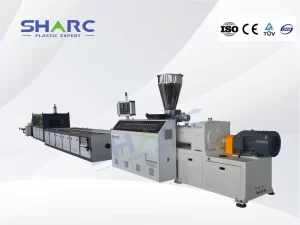
Extrusion is a manufacturing process where raw material is forced through a shaped die under high pressure, forming a continuous shape as it exits. In PVC extrusion, the material is melted, shaped, and then cooled to retain the desired profile. This process is popular for producing parts with consistent cross-sectional shapes, such as pipes, tubes, and profiles.
The PVC Profile Extrusion Process: Step-by-Step
The extrusion of PVC profiles involves a series of precise stages to ensure quality and uniformity in the final product. Here is an overview of the steps in this process:
1. Feeding and Heating
The extrusion process begins with feeding PVC resin and additives into an extruder machine. The additives often include stabilizers, lubricants, and colorants, which enhance the material’s properties. The mixture is then heated in the extruder barrel, reaching temperatures typically between 150°C and 200°C, depending on the desired properties of the PVC profile.
2. Melting and Mixing
As the material moves along the extruder, it melts and mixes uniformly. Screw designs and speeds are adjusted to optimize melting and homogenization. This stage is critical, as inconsistent melting can lead to defects in the final profile.
3. Extrusion Through the Die
The melted PVC is pushed through a die that shapes it into the desired cross-sectional profile. Dies are custom-designed to achieve the specific shape required for each PVC profile product. This stage demands precision, as even minor imperfections in the die can affect the quality of the final output.
4. Cooling and Calibration
Once the PVC exits the die, it enters a cooling chamber. The profile is carefully calibrated to retain its shape and dimensions during cooling. Cooling is done gradually using water or air to prevent warping or shrinking.
5. Cutting and Finishing
After cooling, the extruded PVC profile is cut to the desired length. Additional finishing processes, like surface smoothing or UV coating, may also be applied to improve the product’s durability and appearance.
Types of PVC Profile Extrusion Methods
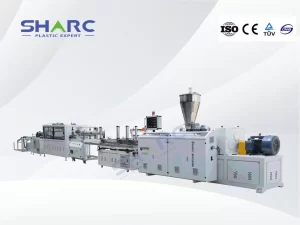
The extrusion process can be further customized to meet different product requirements. Here are some variations in PVC profile extrusion:
1. Co-extrusion
Co-extrusion involves using two or more materials simultaneously to create a multi-layered profile. For example, a rigid inner layer with a flexible outer layer can enhance the product’s durability and aesthetics.
2. Tri-extrusion
Tri-extrusion is a more advanced process that utilizes three types of materials. This technique is especially useful for producing profiles requiring multiple characteristics, such as UV resistance, insulation, and flexibility.
3. Post-extrusion Processing
Some PVC profiles require additional treatment after extrusion, such as embossing, coating, or laminating, to enhance their aesthetic or functional properties.
Advantages of PVC Profile Extrusion
PVC profile extrusion offers several benefits, which have made it the preferred method for producing plastic profiles. Key advantages include:
Cost-Effectiveness: Extrusion allows for the continuous production of long profiles, making it a cost-effective process.
Versatility in Design: Extrusion can produce complex shapes that are difficult to achieve through other methods.
Material Efficiency: Extrusion minimizes waste, as excess material can often be reused in the process.
Durability: Extruded PVC profiles are highly durable and can withstand exposure to extreme conditions, making them ideal for construction and outdoor applications.
Applications of Extruded PVC Profiles
The versatility and durability of PVC profiles make them suitable for a wide range of applications across various industries:
1. Construction and Building Materials
PVC profiles are widely used in the construction industry for window frames, doors, and siding due to their weather resistance and thermal insulation properties.
2. Electrical and Cable Management
PVC profiles are used for cable ducts and conduits, protecting electrical wiring and ensuring safe cable management.
3. Furniture and Interior Design
PVC trim profiles and decorative panels are popular in interior design for their aesthetic appeal and ease of installation.
4. Automotive Components
In the automotive industry, extruded PVC profiles are utilized for seals, gaskets, and other parts that require high durability and resistance to environmental factors.
5. Agriculture and Irrigation
PVC profiles are essential in agriculture for irrigation pipes and water management systems due to their corrosion resistance.
Challenges in PVC Profile Extrusion
Despite its advantages, the extrusion of PVC profiles comes with specific challenges that manufacturers must address:
1. Die Design and Maintenance
The die design needs to be precise to ensure accurate profile shapes. Additionally, the die requires regular maintenance, as wear and tear can affect the product quality.
2. Temperature Control
Accurate temperature control throughout the extrusion process is essential, as overheating or underheating can lead to inconsistencies in profile strength and appearance.
3. Material Compounding
The quality of PVC profiles depends heavily on the right combination of additives. Selecting the correct stabilizers, fillers, and plasticizers is vital for achieving the desired properties.
Quality Control in PVC Profile Extrusion
Quality control is a critical part of the PVC extrusion process to ensure product consistency and reliability. Common quality control measures include:
Dimensional Inspection: Ensures that the profile matches the specified dimensions and tolerances.
Surface Quality Check: Detects any surface defects such as scratches, blemishes, or warping.
Tensile and Impact Testing: Assesses the profile’s strength and resistance to impact, ensuring durability for various applications.
Environmental Considerations in PVC Extrusion
PVC production and extrusion are often criticized for their environmental impact. However, advancements in manufacturing practices are helping to minimize these concerns. Some strategies include:
Recycling: Many PVC profiles can be recycled, reducing waste and conserving raw materials.
Eco-Friendly Additives: Manufacturers are now using less toxic additives to make PVC more environmentally friendly.
Energy Efficiency: Modern extrusion machines are more energy-efficient, which helps reduce the carbon footprint associated with the production process.
Future Trends in PVC Profile Extrusion
With continuous innovation, the future of PVC profile extrusion looks promising. Trends include:
Biodegradable Additives: The development of biodegradable additives is on the rise to make PVC products more eco-friendly.
Smart Extrusion Technology: Automated and AI-driven extrusion systems offer more precise control over the process, improving quality and reducing waste.
Enhanced Customization: Advances in die technology and co-extrusion are enabling greater customization for specialized applications, such as medical devices and high-performance automotive parts.
Conclusion
The extrusion of PVC profiles is a complex yet highly efficient manufacturing process that plays a crucial role in various industries. With the ability to produce durable, versatile, and cost-effective profiles, PVC extrusion meets the demands of modern manufacturing, from construction to electronics. As technology advances, we can expect further innovations in the field, making PVC profile extrusion even more sustainable and adaptable for new applications.